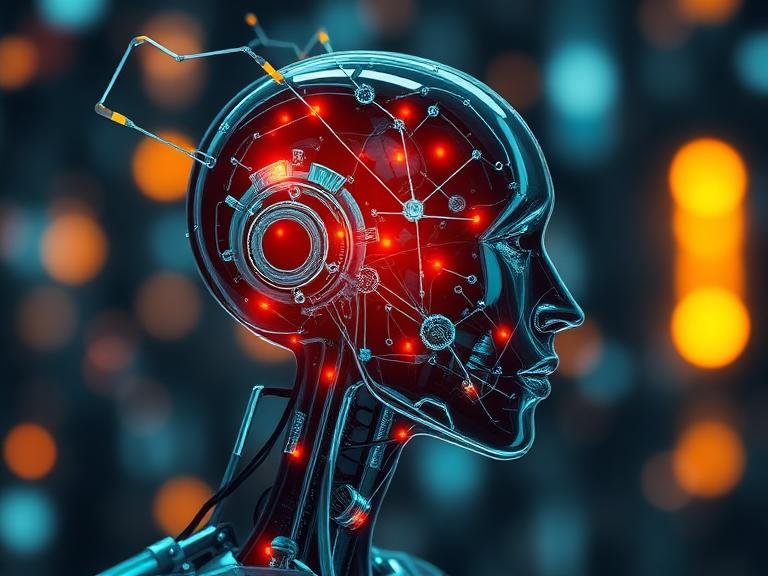
If you have ever wondered how machines actually “think,” the answer lies in knowledge representation. Artificial intelligence does not just store raw data; it organizes that data in structured ways so it can reason, make decisions, and solve problems. Think of it like having a massive library. Without a proper catalog system, finding the right book becomes almost impossible. Knowledge representation acts as that catalog system, helping AI systems connect facts, interpret them, and use them effectively.
In modern AI, simply having information is not enough. Systems must understand relationships, context, and changes over time. This is especially important in real-world environments where conditions are constantly shifting. For example, a robot navigating a room must understand not just where objects are, but how their positions can change after certain actions. This is where structured frameworks like situation calculus become extremely valuable.
By organizing knowledge in a logical format, AI systems can move beyond basic data retrieval. They can answer complex questions, make predictions, and even plan future actions. Without this foundation, advanced AI capabilities would not exist.
Role of Reasoning in AI Systems
Representation is only one part of the puzzle. Reasoning is what brings intelligence to life. It allows AI systems to draw conclusions from existing knowledge and predict outcomes based on actions. Imagine asking a system, “What happens if I move this object?” Without reasoning, it would not be able to provide a meaningful answer.
Reasoning enables machines to simulate possibilities. A robot, for instance, does not just act randomly. It evaluates options, predicts results, and selects the best course of action. This ability transforms AI from a passive data holder into an active problem solver.
Situation calculus plays a major role here because it provides a logical structure for reasoning about actions and change. Instead of guessing outcomes, the system uses rules and relationships to determine what will happen next. This makes AI systems more reliable, efficient, and intelligent in dynamic environments.
What Is Situation Calculus
Definition and Origin
Situation calculus is a formal method used in artificial intelligence to represent and reason about changes in the world. It was introduced in the 1960s as part of early research into how machines could think logically about actions and their consequences. Over time, it has become one of the most important frameworks for modeling dynamic systems.
At its core, situation calculus is based on first-order logic. It represents the world as a sequence of situations, where each situation is the result of performing an action. Instead of focusing on time directly, it focuses on how actions transform one state into another. This makes it particularly useful for applications where actions drive change.
For example, consider a robot cleaning a room. The initial situation might be a dirty room. After performing a cleaning action, the new situation reflects a clean room. Situation calculus helps the system understand and represent this transformation logically.
Key Idea Behind Situation Calculus
The central idea of situation calculus is that the state of the world is determined by the sequence of actions performed. Rather than storing every possible state, the system defines rules that describe how actions affect the world. This approach is both efficient and flexible.
Think of it like a story. Each action is a sentence, and each situation is a chapter. By following the sequence of actions, the AI system can understand how the story unfolds. It can also predict future chapters by analyzing possible actions.
This method allows AI systems to reason about change without needing to memorize every possible scenario. Instead, they generate new situations dynamically based on logical rules.
Core Components of Situation Calculus
Situations
A situation represents a snapshot of the world at a specific point. However, it is not just a static state. It is defined by the sequence of actions that led to it. This makes situations relational rather than independent.
For example, a situation might represent a robot being in a kitchen after moving from the living room. The key detail is not just the location, but how the robot got there. This historical context is essential for reasoning and planning.
Situations form the backbone of situation calculus. They provide the structure needed to track changes and understand how the world evolves over time.
Actions
Actions are the driving force behind change. They transform one situation into another. Each action has preconditions that must be satisfied before it can occur, and effects that describe what changes after it is performed.
For instance, picking up an object requires that the object is within reach. After the action, the object is no longer on the ground but in the robot’s hand. These logical relationships make actions predictable and manageable.
By defining actions clearly, AI systems can simulate outcomes and plan sequences effectively. This is crucial for tasks like navigation, problem-solving, and automation.
Fluents
Fluents are properties that can change across situations. They describe the state of the world within a given situation. Examples include the location of an object, whether a door is open, or the cleanliness of a room.
Fluents are important because they provide the actual content of each situation. Without them, situations would be empty and meaningless. They allow the system to track changes and understand the effects of actions.
Together, situations, actions, and fluents create a complete framework for representing dynamic environments.
How Situation Calculus Represents Knowledge
First-Order Logic Representation
Situation calculus relies on first-order logic to represent knowledge. This allows the system to express relationships, rules, and conditions in a structured way. Logical statements describe what is true in each situation and how actions affect those truths.
This representation is powerful because it supports inference. The system can derive new information from existing knowledge. For example, if it knows that a room is dirty and cleaning removes dirt, it can infer that the room will be clean after the cleaning action.
This logical foundation makes situation calculus both precise and flexible. It can handle complex scenarios while maintaining clarity and consistency.
Axioms in Situation Calculus
Axioms are the rules that define how the system operates. They act like laws that govern the behavior of actions and situations. There are several types of axioms, including those that define when actions are possible, how they change the world, and what the initial state looks like.
These rules ensure that the system behaves logically. They prevent contradictions and provide a clear framework for reasoning. By combining different axioms, the system can model complex environments and predict outcomes accurately.
How Reasoning Works in Situation Calculus
Deduction of Action Outcomes
One of the strongest features of situation calculus is its ability to deduce the results of actions. Given a situation and an action, the system can determine what the next situation will look like. This allows for precise prediction and planning.
Instead of relying on trial and error, the system uses logical rules to evaluate possible actions. This makes decision-making more efficient and reliable. It is especially useful in environments where mistakes can be costly.
Regression and Progression Reasoning
Situation calculus supports both forward and backward reasoning. Forward reasoning, or progression, starts from the current situation and moves toward future states. Backward reasoning, or regression, starts from a goal and works backward to determine the necessary steps.
Regression is particularly useful in planning. It simplifies complex problems by breaking them down into smaller, manageable steps. This approach is similar to solving a puzzle by starting with the final picture and working backward.
The Frame Problem in Situation Calculus
What Is the Frame Problem
The frame problem refers to the challenge of representing what does not change after an action. In many cases, most aspects of the world remain the same, but explicitly stating all unchanged properties can be inefficient.
How Situation Calculus Solves It
Situation calculus addresses this issue using successor state axioms. These rules specify only what changes, allowing the system to assume that everything else remains the same. This reduces complexity and improves efficiency.
Real-World Applications of Situation Calculus
Robotics
In robotics, situation calculus helps systems understand how actions affect their environment. It enables robots to plan movements, manipulate objects, and adapt to changes.
Automated Planning
Planning systems use situation calculus to determine sequences of actions that achieve specific goals. This is widely used in logistics, scheduling, and game development.
Intelligent Agents
Intelligent agents rely on situation calculus to make decisions in dynamic environments. It allows them to evaluate options and choose the best course of action.
Advantages of Situation Calculus
Situation calculus provides a precise way to represent dynamic systems. It supports logical reasoning, enables planning, and scales well for complex environments. These strengths make it a valuable tool in artificial intelligence.
Limitations and Challenges
Despite its advantages, situation calculus can become complex in large systems. It requires detailed modeling and may struggle with uncertainty. These challenges have led researchers to explore hybrid approaches.
Comparison With Other Knowledge Representation Techniques
Situation Calculus vs Event Calculus
| Feature | Situation Calculus | Event Calculus |
|---|---|---|
| Focus | Actions | Events |
| Time Representation | Implicit | Explicit |
| Use Case | Planning | Temporal reasoning |
Situation Calculus vs Semantic Networks
| Feature | Situation Calculus | Semantic Networks |
|---|---|---|
| Structure | Logical | Graph-based |
| Reasoning | Strong | Limited |
| Use Case | Dynamic systems | Static relationships |
Future of Situation Calculus in AI
As AI evolves, situation calculus continues to play an important role. Researchers are combining it with machine learning to handle uncertainty and improve performance. This hybrid approach aims to create systems that can both learn from data and reason logically.
The future of AI will likely depend on combining symbolic reasoning with data-driven methods. Situation calculus remains a key part of this vision.
Conclusion
Situation calculus is a powerful framework for representing and reasoning about change in artificial intelligence. By modeling the world as a sequence of situations influenced by actions, it allows systems to understand and predict outcomes effectively. Its logical structure makes it essential for applications like robotics and planning.
Although it has limitations, ongoing research continues to expand its capabilities. It remains a fundamental tool for building intelligent systems that can adapt to dynamic environments.
FAQs
What is situation calculus in simple terms
It is a method used in AI to represent how actions change the state of the world.
What are the main components of situation calculus
The main components are situations, actions, and fluents.
How is situation calculus used in AI
It is used for planning, robotics, and reasoning about dynamic environments.
What is the frame problem
It is the challenge of representing what does not change after an action.
Is situation calculus still relevant today
Yes, it is still widely used and is being combined with modern AI techniques.